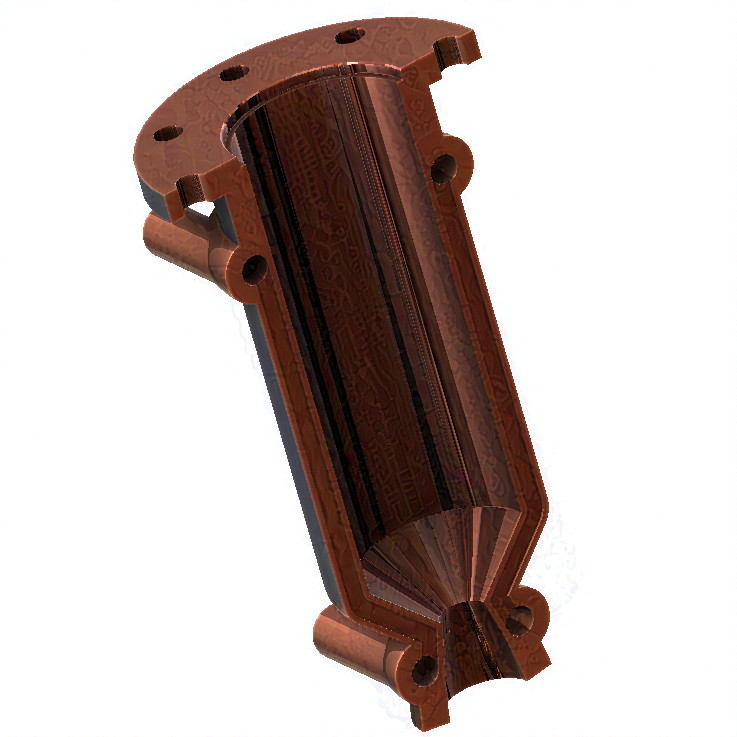
I designed a regeneratively cooled thrust chamber that is compatible with previous mk1 modular thrust chamber system. The important consideration is that the proppellant flowing through the cooling channels should not heat up tothe point where it phase shifts to a gas. The thermal conducivity of the gasseous fuel is significantly lower than the liquid fuel for which the system is designed. This would cause the chamber to overheat causing further conductivity reduction in a cycle until the chamber melts. Thermal analysis was performed in matlab with some steady state values calculated from RPA using GOX-Ethanol chemistry.
The brass chamber from mk1 design was limited by the ammount of heat it could absorb, but it let us characterize the system, timing, and other values. My goal was to validate efficacy of lost PLA casting methods to create a thrust chamber with internal channels. I used 3 down sprue's for the larger chamber and 2 for the maller chamber with equal size pour basin at the top. The metal is designed to flow up from the bottom to prevent the trapping of air bubbles. Not pictured here are wax air vents added at a later time.
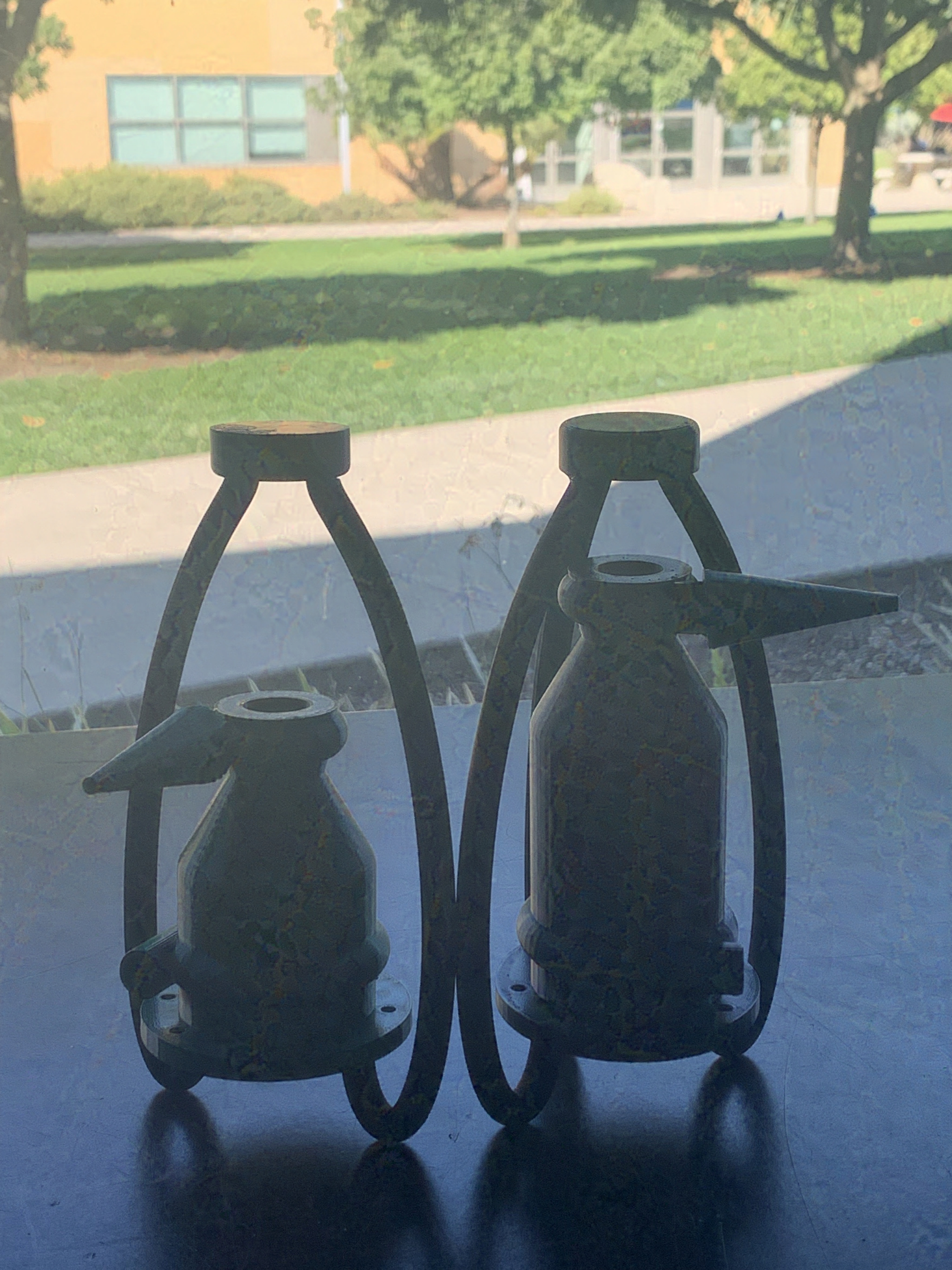
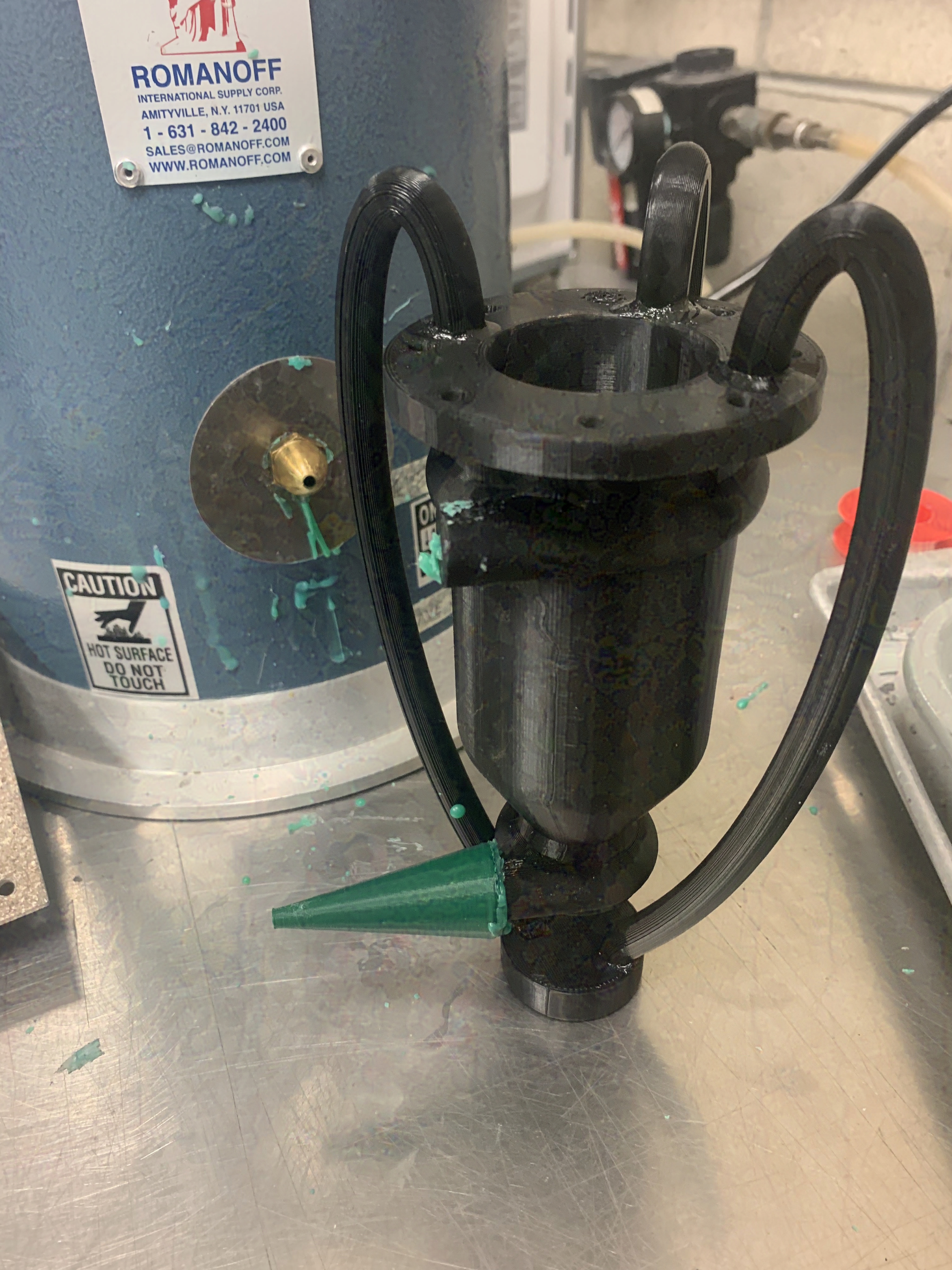
I used cone shaped port connectors to allow me to connect the mold to a vacuum chamber. This allowed me to use a vacuum pump to pull the plaster slurry through mold and create the complex internal channels for cooling. The part was submerged in plaster and the top manifold was connected to the pump. Once the slurry had pumped through and some air bubbles had passed I filled the remaining mold with plaster. One thing that I did not account for was the buoyancy of the mold positive. This made the part impossible to submerge without the large weight shown on the right most figure below.
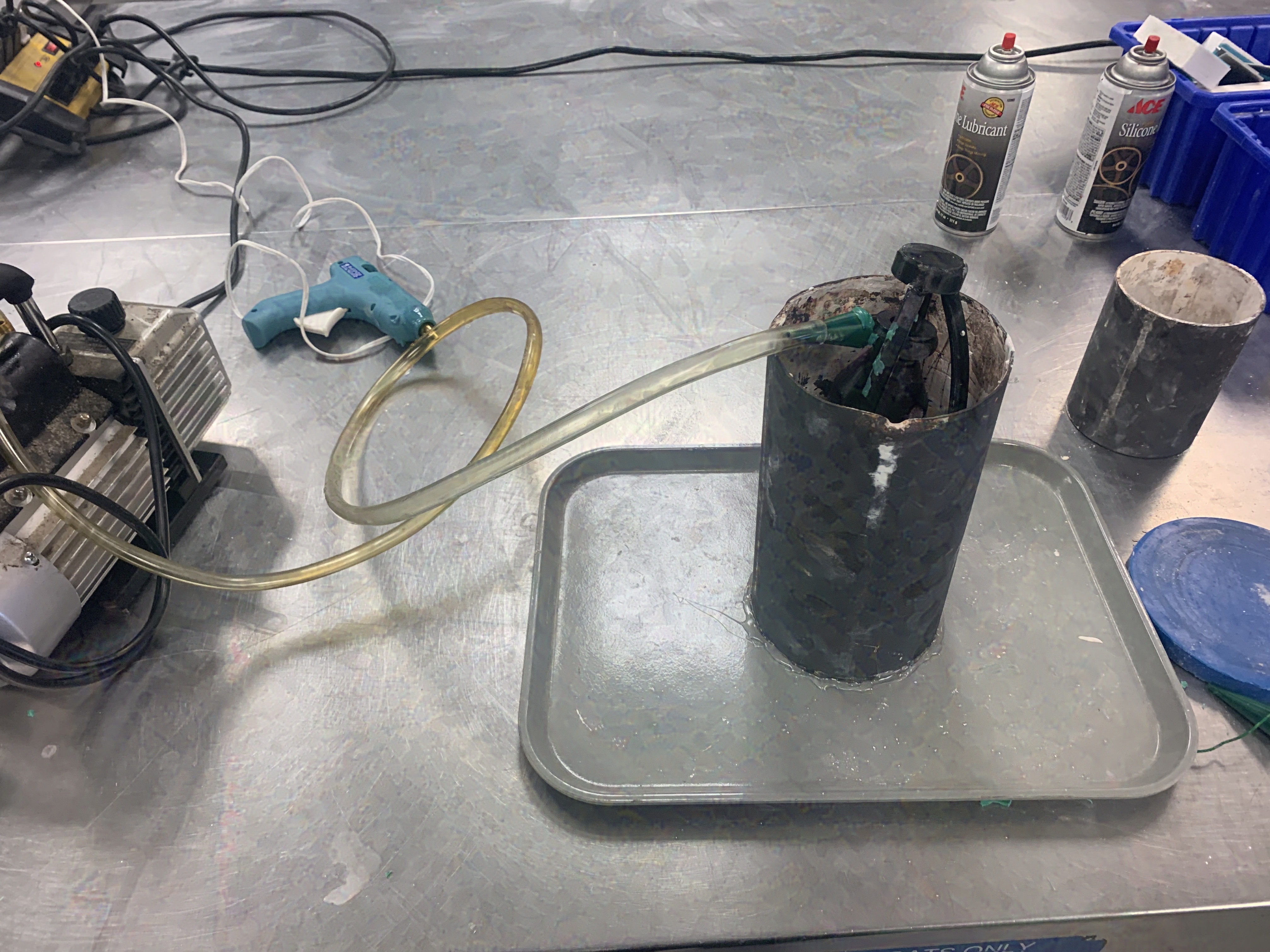
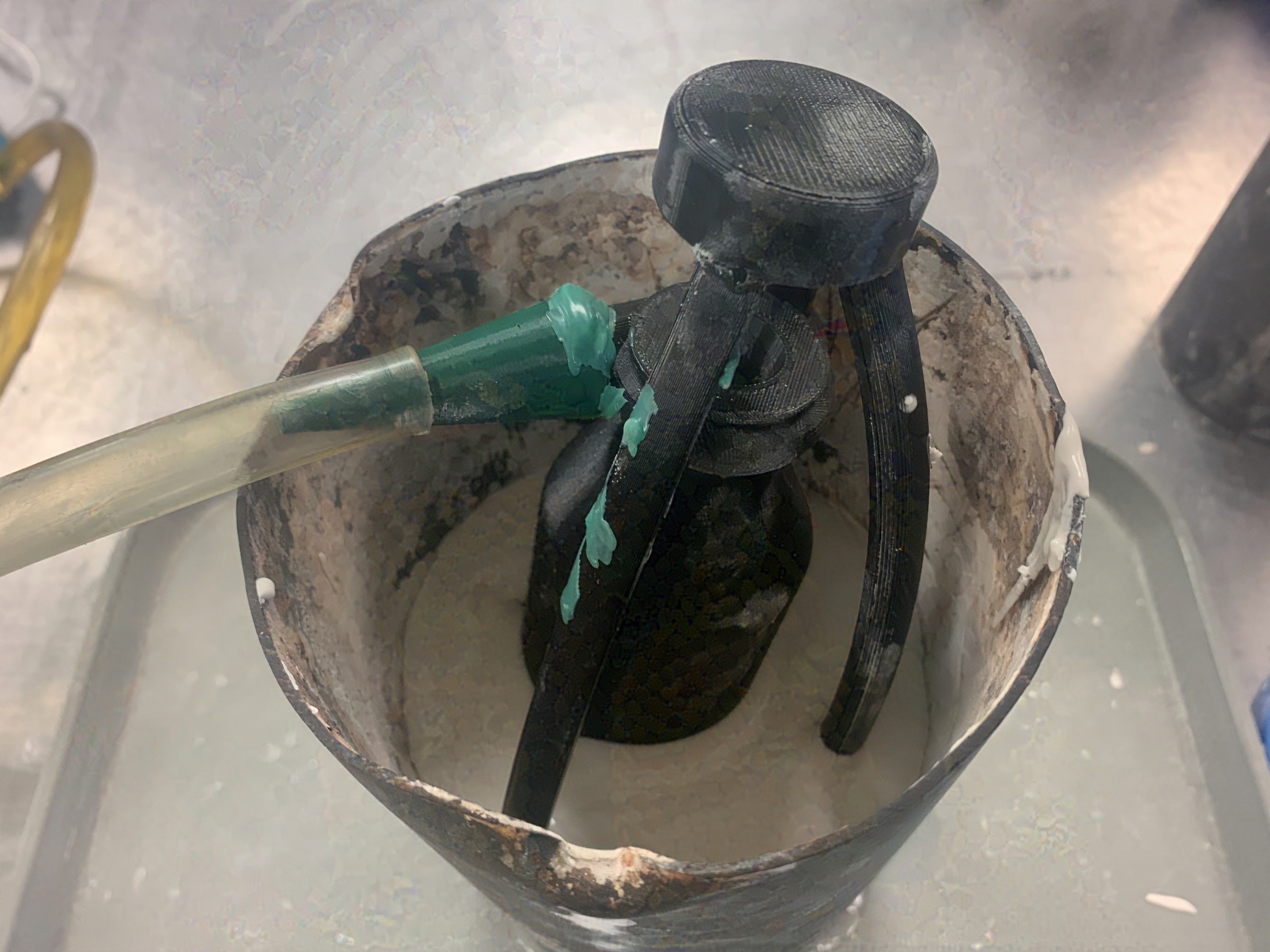
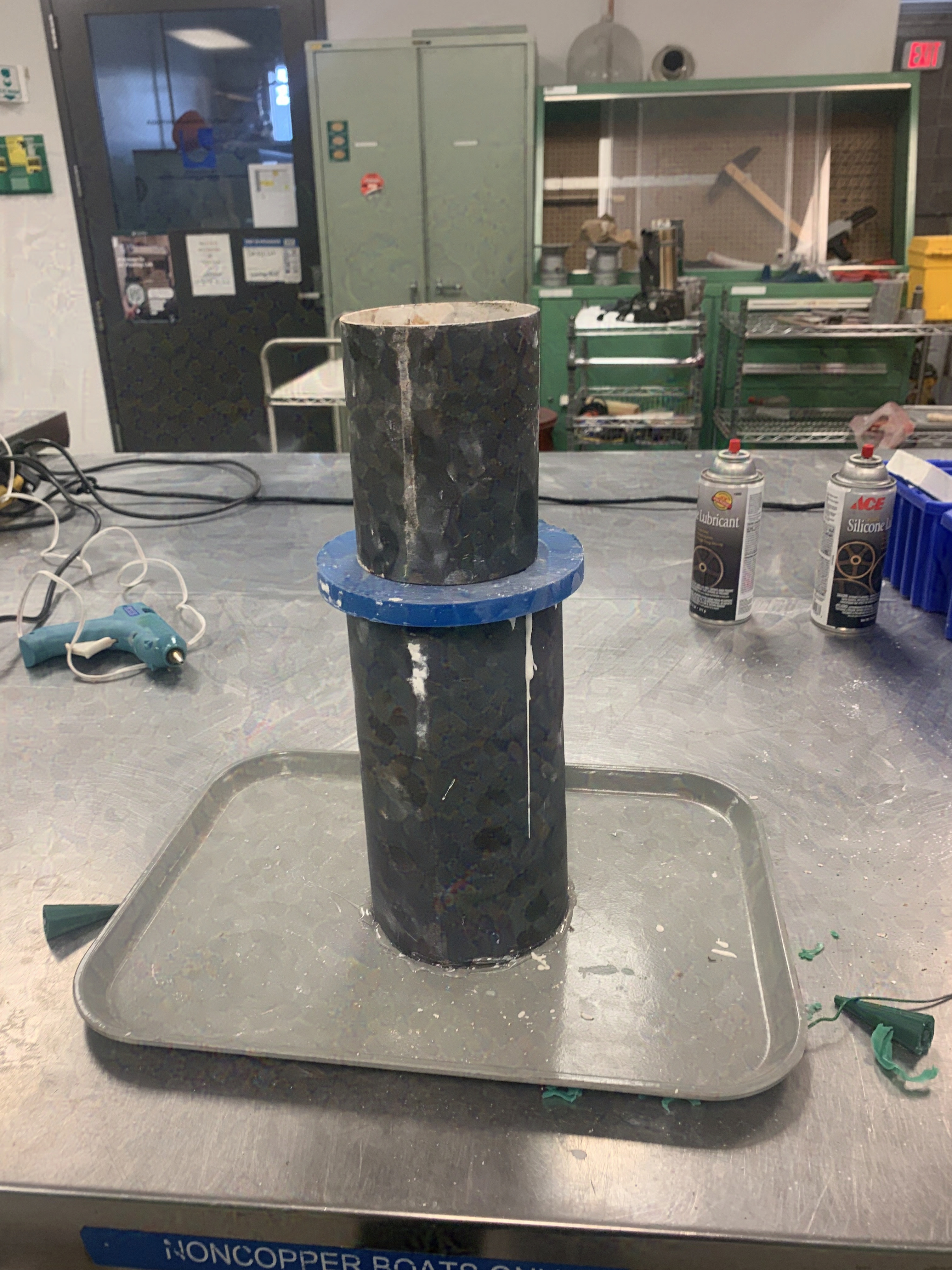
After the plaster cured, I baked the mold at 500°F to melt and vaporize the PLA core, leaving a hollow cavity for casting. For the pour itself I used an electric induction crucible. Copper was the target material, but it is expensive and harder to cast cleanly. The porosity, shrinkage, and high surface tension of copper all work against filling narrow internal channels under vacuum. To de-risk the mold and gating before committing to copper, I cast both patterns in aluminum as a feasibility check.
I no longer have photos of the finished castings; a failed storage chip on my phone wiped the project images from that device only. Both aluminum parts came out with significant porosity, most likely because the mold geometry prevented complete burnout of the PLA core. Plastic appears to have pooled in the troughs of the mold that when in contact with hot metal, leaving uneven voids in the casting. On the smaller thrust chamber I sectioned through the top manifold and ran water from the bottom outlet through the chamber wall channels — roughly 75% of the passages flowed correctly, confirming that the internal geometry was largely sound, but pooled plastic in the outer walls kept those surfaces from sealing fully.